
Buying a home in India can feel exciting right up until the paperwork starts.
You visit the property, like the location, compare the floor plans, talk about the price, and start imagining your furniture in the living room. Then someone mentions RERA, project registration, possession dates, approvals, and escrow accounts.
Suddenly, the simple decision of buying a home feels much bigger.
RERA was introduced to bring more accountability to India’s real estate sector and give property buyers a legal framework when dealing with registered real estate projects.
If you’re buying an apartment, villa, or plot in a project covered by RERA, understanding the basic rules can save you from some very expensive mistakes.
Table of Contents
What is RERA?
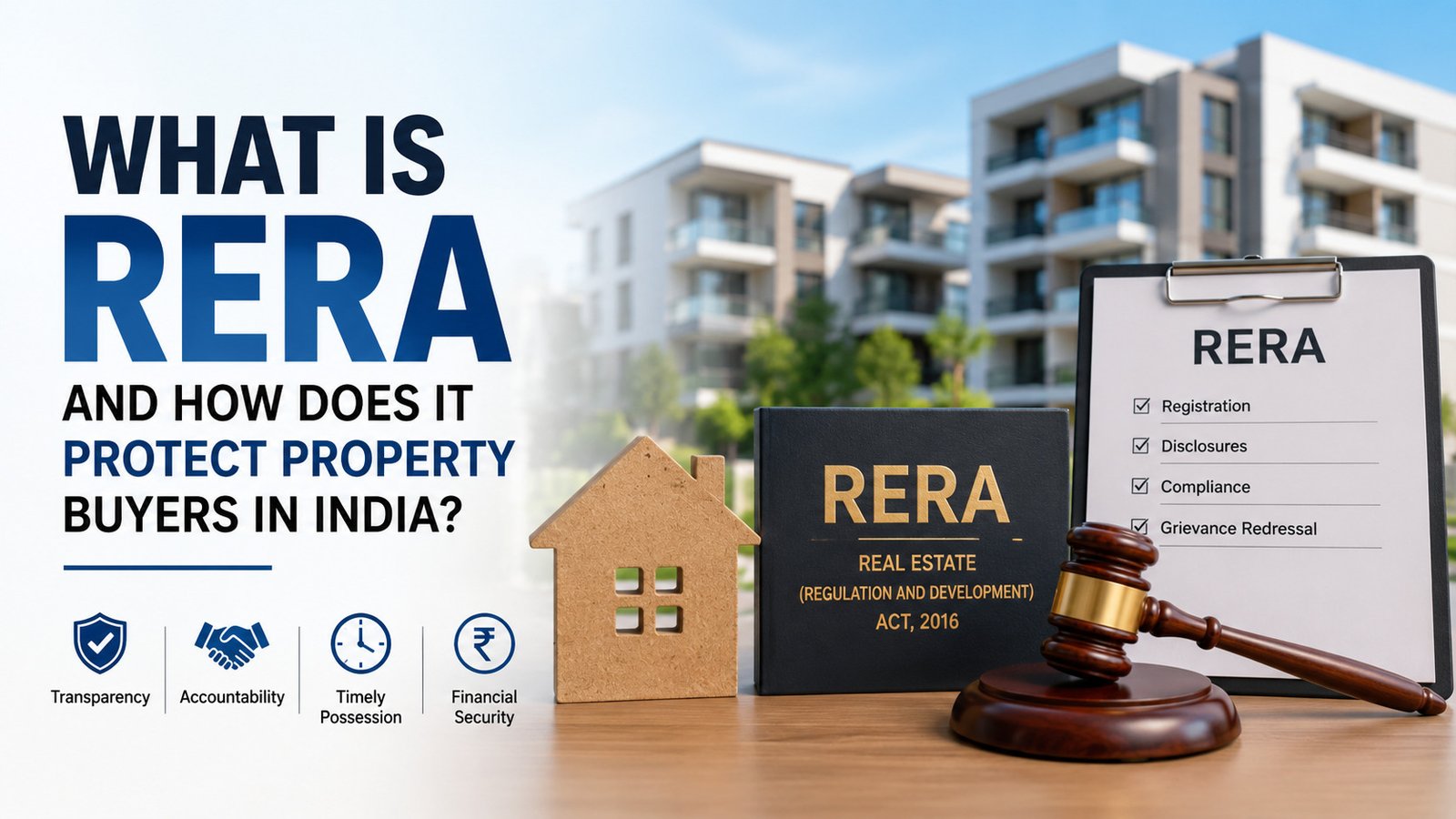
RERA stands for the Real Estate (Regulation and Development) Act, 2016.
The law was created to regulate certain real estate projects and protect the interests of home buyers. It also established Real Estate Regulatory Authorities in states and Union Territories to handle registration, complaints, and other matters covered by the Act.
Before RERA, buyers often complained about issues such as delayed possession, changes in project plans, unclear information, and disputes with builders.
RERA created a more formal system around these transactions.
Think of it as a rulebook for eligible real estate projects.
The important word here is eligible. RERA doesn’t mean every property transaction in India works in exactly the same way. The Act has exemptions, thresholds, and state-level rules that you need to consider.
Why was RERA introduced?
Real estate transactions involve large amounts of money.
A buyer might spend ₹40 lakh, ₹70 lakh, ₹1 crore, or much more on a property. For many families, it’s the biggest financial commitment they’ll ever make.
A delay of 2 years can affect rent, loan interest, school planning, relocation, and family finances.
RERA was designed to create greater accountability between promoters and buyers.
The system focuses on areas such as project registration, disclosure of project information, use of project funds, possession commitments, and mechanisms for buyer complaints.
Who needs to register a project under RERA?
Generally, qualifying real estate projects covered by the Act need to be registered with the relevant state or Union Territory RERA authority before being advertised, marketed, booked, or sold.
The Act includes specific exemptions, including certain smaller projects based on prescribed thresholds.
The exact rules can also vary because states have their own RERA authorities and regulations.
So if a builder tells you, “RERA doesn’t apply to this project,” ask for the reason.
Don’t simply accept the sentence and move on.
Ask for the relevant registration or exemption details and verify them through the official RERA authority for that state.
How can a buyer check RERA registration?
This is one of the easiest checks you can perform before paying a large amount.
Suppose you’re considering a project in Haryana.
Search for the project on the official Haryana RERA portal and compare the information there with what the builder is telling you.
Check:
- Project name
- Promoter name
- Registration number
- Project location
- Number of towers or units
- Approved project details
- Proposed completion date
- Any available extension information
- Complaints or orders where publicly available
Do the same for projects in other states using the relevant state RERA authority.
And check the actual project.
Sometimes buyers search the builder’s name and assume they’ve verified the project. That’s not enough. A developer can have multiple projects, and their RERA status can differ.
RERA registration gives you useful project information
One of the biggest advantages for buyers is access to project information.
A registered project generally has to provide prescribed information to the regulatory authority.
That can include details about the promoter, project, approvals, plans, timelines, and other required disclosures.
This gives you another source to compare against the sales team’s promises.
For example, imagine the salesperson says possession will happen in December 2027.
You should check what completion date appears in the RERA records.
If the dates don’t match, ask why.
Get the explanation in writing.
RERA and project advertisements
You may have seen RERA registration numbers printed on real estate advertisements.
That’s not decorative text.
For a project covered by RERA, registration information is an important part of how the project is presented to buyers.
If you’re looking at a newspaper advertisement, website, billboard, brochure, or social media promotion, don’t assume the presence of a registration number means everything is automatically safe.
Verify it.
A number printed on a brochure can be copied incorrectly. A project can have several phases. The name on the advertisement might also differ slightly from the registered project name.
The safest approach is to search the official authority’s records.
What does RERA say about project funds?
One major feature of RERA concerns the money collected from buyers.
For eligible projects, the promoter is required to deposit a prescribed portion of amounts realised from allottees into a separate account, with withdrawals linked to the percentage of completion and subject to the requirements under the Act and applicable rules.
The idea is to connect project collections with project development.
For a buyer, this matters because real estate projects involve huge cash flows.
If money collected for one project is freely moved elsewhere, completing the original project can become harder when cash gets tight.
RERA introduced financial discipline around project funds.
There are specific procedures and professional certifications involved, so don’t reduce this provision to “the builder’s money is locked away.”
The actual system is more detailed.
Can a builder change the approved plan?
Project plans matter.
You may book an apartment because the brochure shows a garden, road, clubhouse, open area, tower arrangement, or other feature.
Later, you discover that the layout has changed.
RERA places restrictions on changes to sanctioned plans and specifications. Certain alterations require the consent of allottees, subject to the provisions of the Act.
This gives buyers a stronger position when substantial changes are proposed.
Still, read the agreement carefully.
A buyer shouldn’t assume every change requires individual written approval. The legal position depends on the nature of the change and the applicable provisions.
What happens if the project is delayed?
This is probably the RERA issue most home buyers care about.
You take a home loan.
Your EMI starts.
Your rented house still costs ₹20,000 or ₹30,000 every month.
Then the builder tells you possession will be delayed.
That delay can become expensive very quickly.
RERA provides remedies in situations involving failure by the promoter to complete or give possession according to the terms of the agreement, subject to the Act and applicable rules.
Depending on the circumstances, a buyer may have rights relating to withdrawal, refund, interest, compensation, or continued participation in the project.
The exact remedy depends on the facts.
That’s why your agreement for sale matters so much.
Category – Guides , Investment
What if the buyer wants to leave the project?
Suppose you booked a flat for ₹80 lakh.
Two years later, construction has fallen badly behind schedule.
You no longer want the property.
RERA contains provisions dealing with a buyer’s rights when the promoter fails to comply with obligations under the Act or agreement.
A buyer may have a right to withdraw and seek the remedies available under the law.
Again, don’t assume every delay automatically means you can cancel and receive every rupee immediately.
Look at the agreement, project status, applicable RERA provisions, and orders from the relevant authority.
Real Estate is good investmet in india or not ?
RERA can help with defective construction
Your relationship with the builder doesn’t necessarily end when you receive the keys.
RERA provides for a promoter’s liability regarding certain structural defects and defects in workmanship, quality, provision, or services brought to the promoter’s notice within the prescribed period from possession.
This matters because some problems appear only after people start living in the property.
A leaking bathroom may not look serious during a 20-minute site visit.
A recurring seepage problem after the monsoon is a different story.
Keep photographs, inspection reports, emails, letters, and complaint records.
Paperwork becomes useful when conversations don’t solve the problem.
Can a buyer file a complaint under RERA?
Yes, where the matter falls within the authority’s jurisdiction and the Act’s provisions.
An aggrieved buyer can file a complaint with the relevant RERA authority or adjudicating mechanism, depending on the nature of the claim.
The process and fees vary by state.
Before filing, collect your documents.
You may need:
- Agreement for sale
- Booking form
- Payment receipts
- Bank statements
- Possession correspondence
- Builder emails
- Site photographs
- RERA registration details
- Relevant notices
- Any previous complaint correspondence
Don’t send a 12-page emotional complaint when a clean timeline will do.
Write down what happened.
For example:
January 2025: Booking amount paid.
March 2025: Agreement signed.
April 2025 to December 2026: Monthly payments made.
December 2027: Promised possession date.
June 2028: Construction still incomplete.
That timeline is far easier to understand.
RERA doesn’t replace due diligence
This part is easy to miss.
RERA is useful, but you still need to check the property yourself.
A RERA registration number doesn’t mean you can skip title verification.
You should still investigate:
- Ownership and title
- Encumbrances
- Land records
- Approved plans
- Building permissions
- Loan or mortgage issues
- Development agreements where relevant
- Property taxes
- Location
- Construction quality
- Builder history
- Agreement terms
For a major purchase, a property lawyer can review the documents.
Spending money on legal review before paying ₹50 lakh can be a sensible decision.
RERA vs property title
These are 2 different checks.
RERA mainly deals with regulation of covered real estate projects and promoter obligations.
Title deals with ownership and legal rights over the property or land.
Imagine a project is RERA registered.
You still need to understand who owns the land, whether there are claims or encumbrances, and whether the relevant approvals exist.
Don’t treat RERA as a substitute for title due diligence.
Property Investment Mistakes to Avoid
What should first-time buyers check on the RERA portal?
Create a small checklist before visiting the project.
Check the registered project name.
Check the promoter.
Check the registration number.
Check the location.
Check the proposed completion date.
Check the project details.
Compare the number of units and towers with the brochure.
Look for updates.
If there are extensions or regulatory orders, read them.
And save copies of important information.
Websites change.
Your screenshot from the day you booked the property can become useful later.
What is the role of the RERA authority?
The state or Union Territory RERA authority administers the applicable RERA framework.
Its functions can include registering projects and agents, maintaining information, handling complaints within its jurisdiction, issuing directions, and taking action where the law allows.
There are also appellate mechanisms under the RERA framework.
The exact process differs across jurisdictions.
If you have a dispute, check the official RERA website for your state instead of relying on a random property blog or a WhatsApp message.
RERA and real estate agents
RERA also regulates real estate agents dealing with registered projects covered by the Act.
Eligible agents generally need registration with the relevant authority.
So if you’re buying through an agent, ask for their RERA registration details where applicable.
Then verify them.
It takes a few minutes.
What RERA cannot guarantee
RERA doesn’t guarantee that every project will be completed exactly as advertised.
It doesn’t remove every property risk.
It doesn’t replace a lawyer.
It doesn’t guarantee that you’ll never have a dispute.
And it doesn’t mean a project with RERA registration is automatically the perfect property for your family.
You still have to check the land, documents, finances, location, construction, contract, and your own affordability.
A practical RERA check before booking
Before paying a booking amount, spend 30 minutes on this process.
Step 1: Find the official RERA authority for the state.
Step 2: Search the project.
Step 3: Match the project name and location.
Step 4: Check the promoter.
Step 5: Note the registration number.
Step 6: Check the proposed completion date.
Step 7: Compare the registered details with the builder’s brochure.
Step 8: Read available orders or updates if relevant.
Step 9: Ask the builder about any mismatch.
Step 10: Get important explanations in writing.
That last step is underrated.
A salesperson saying “sir, don’t worry, everything will be done” isn’t useful evidence.
An email is.
Final thought
Buying a property can involve years of savings and decades of loan repayments.
RERA gives buyers a legal framework and access to information that can make the transaction easier to examine.
Use it.
Check the official records before you sign.
And when the property involves a large amount of money, get professional legal advice for documents you don’t fully understand.
A 1-hour document review can feel expensive.
A property dispute can last much longer.
FAQs
1. Is RERA registration mandatory for every property?
No. The Act contains exemptions and thresholds. Applicability depends on the project and the relevant rules. Check the state RERA authority before assuming a project must or must not be registered.
2. Can I check a property’s RERA registration online?
Yes, state and Union Territory RERA authorities generally provide online project registration information. Search using the project’s name, promoter, or registration details.
3. Does RERA guarantee possession on the promised date?
RERA creates obligations for promoters and provides remedies for certain failures, but buyers should still check the agreement, project records, and applicable legal provisions.
4. Can I complain against a builder under RERA?
An eligible buyer can file a complaint when the matter falls within RERA’s jurisdiction. The process depends on the relevant state or Union Territory.
Pingback: Stamp duty and registration charges in India: What home buyers need to know - SM Villa
Pingback: Buying vs Renting in India vs Dubai: Where Does Your Money Go Further in 2026?
Pingback: Property Day Checklist: What to inspect before you accept the keys - SM Villa
Pingback: Top 50 countries with the highest homeownership rates in the world
Pingback: What Adds the Most Resale Value to a House? - SM Villa India